![]()
For approximately 800 years the
Catholic Church
has employed the procedure of the
conclave
to choose a new pope.
“Conclave” means “with a key”, indicating the cardinal-electors are locked up with a key to conduct their deliberations.
In the absence of direct contact with the external world, a crucial aspect of the papal election procedure involves using smoke signals to announce the outcome of the votes.
declare the selection of a new pontiff
.
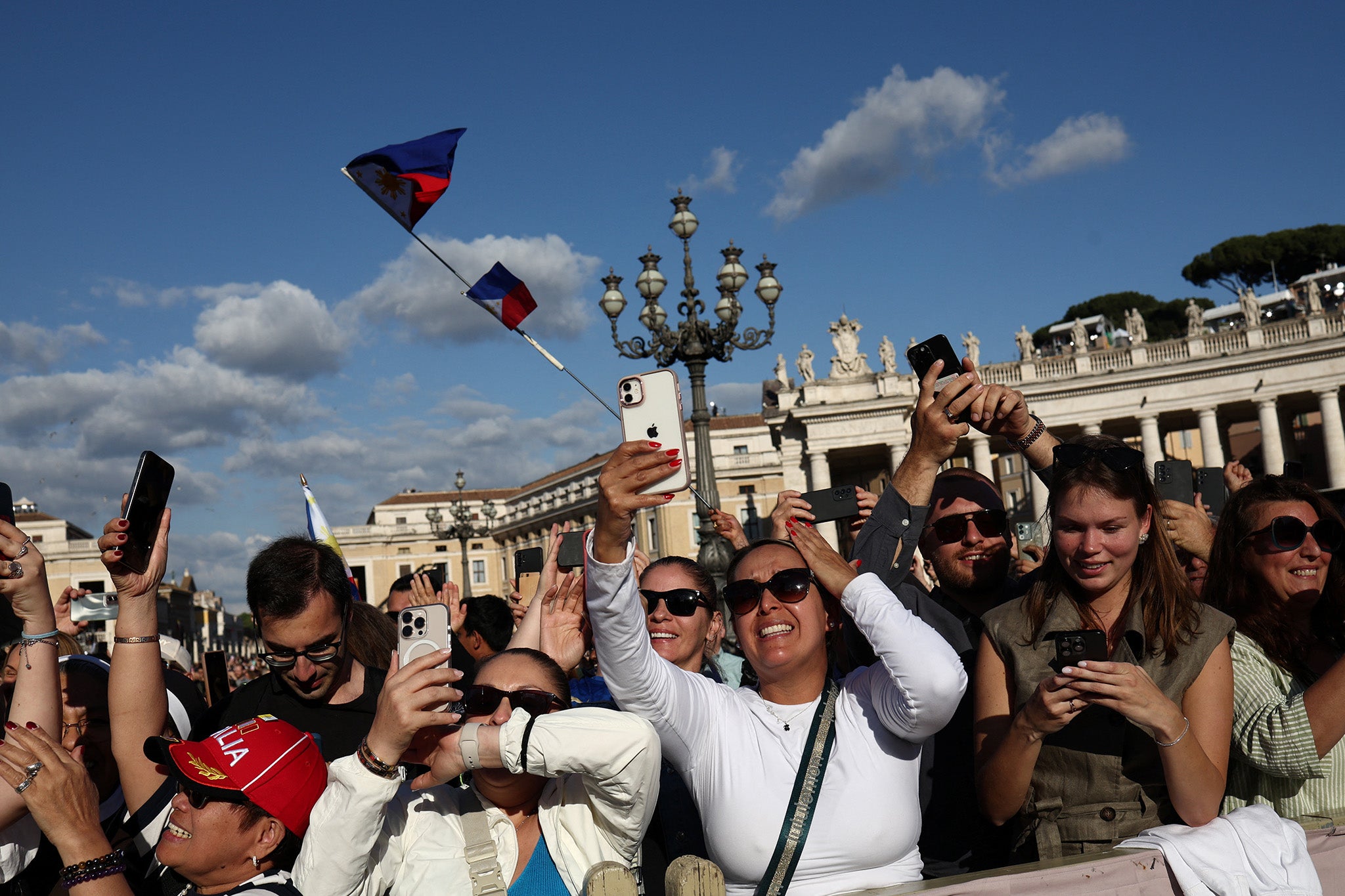
Dark smoke indicates that a new pope has yet to be chosen.
The appearance of white smoke indicates that a new pope has been chosen.
.
Where did this custom originate, and what methods do they use to create the various colored smokes?
Sending messages with smoke
One of the earliest methods of communicating over great distances among humans has been through the use of smoke signals. Over thousands of years, these signals have served various purposes such as signaling an emergency, summoning community members for gatherings, sharing information, and alerting others about approaching adversaries.
A number of Indigenous groups (including those from North America, South America, China, and Australia) have been recognized for their advanced methods of using smoke signals to convey particular messages to individuals located far away.
These methods may involve relocating the fire position (for instance, midway up or atop a hill), altering the hue of the smoke (by employing various kinds of vegetation or wet versus dry foliage), and intermittently disrupting or diverting the smoke plume to create specific smoke patterns.
Catholic incense
Catholics use smoke as part of their rituals in the form of incense.
Incense (derived from the Latin word incendere, which means "to burn") represents prayer, sacrifice, and respect towards individuals and items. The aromatic smoke serves as a symbol of the congregation's prayers ascending to God. As stated in Psalm 141:2, "let my prayer be set before you like incense." Additionally, Revelation 8:3-5 mentions an angel being presented with copious amounts of incense along with the petitions of all believers.
Catholic practices adopted the use of incense from its application in Jewish temple ceremonies as well as in rites at the Greek imperial palace.
Incense smoke is employed to demonstrate respect towards the Gospel book, the lead celebrating priest, the loaves of bread and cups of wine presented during Mass, as well as the altar, cross, the Easter candle, and the remains of the departed at funerals.
This dramatic display of smoke serves as both a visual and aromatic sign indicating that the community's acts of devotion and worship are ascending to God.
Crafting the smoke
Upon commencement of the conclave, the sole means of communication between the electing cardinals and the external world shall be smoke signals emitted via the flue of an expressly installed stove within the premises.
Sistine Chapel
during the conclave.
The practice of incinerating the voting papers dates back to as early as 1417. However, it wasn't until the 18th century that the initial fireplace was established within the Sistine Chapel. During this period, the emission of smoke at specific intervals signified that a new pope had not been chosen; conversely, the lack of smoke meant that a new pontiff had indeed been selected.
Before this practice, a newly elected Pope would typically be proclaimed from the central balcony of St. Peter's Basilica, with an official notice subsequently posted externally for public viewing.
Ever since 1914, white smoke has signaled the selection of a new Pope. The choice of using white and black smoke stems from the common understanding of these colors; white signifies a positive outcome, while black indicates a negative one.
In 1904, Pope Pius X, who served as pontiff from 1903 to 1914, decreed that all records compiled by cardinals throughout the conclave must be incinerated together with the voting papers. The combustion of these documents significantly amplified the smoke output, which became more noticeable externally when his successor, Pope Benedict XV, was chosen in 1914.
After the 1958 conclave, the practice of using chemicals to guarantee either black or white smoke was implemented because wet hay mixed with paper from an inconclusive vote failed to catch fire initially. The white smoke emerged prematurely but later turned dark, leading to confusion amongst the spectators assembled outside.
In 2013, the Vatican Press Office issued
The chemical formulas utilized for generating black and white smoke are as follows:
.
For producing black smoke, potassium perchlorate combined with anthracene—a part of coal tar—and sulfur is set ablaze using an electrical ignition. For generating white smoke, potassium chlorate mixed with lactose and pine rosin is lit up.
Through these smoke signals, the cardinals can instantly and directly convey messages from inside the conclave to the loyal followers eagerly waiting for the announcement of the Catholic Church’s 267th Pope.
Clare Johnson serves as a Professor of Liturgical Studies and Sacramental Theology and is also the Director of the ACU Centre for Liturgy at the Australian Catholic University.
The article was initially published by The Conversation and is being republished here under a Creative Commons license. You can read the original piece.
original article
Independent readers are freethinking global citizens who aren't categorized by conventional demographics or profiles; instead, they're characterized by their perspectives. In our ever more divided world, communities cherish accurate data and straightforward viewpoints shared directly from an impartial news source they find reliable. With knowledge and motivation, these independent thinkers feel enabled and prepared to advocate for what they hold dear.


Comments
Post a Comment