Continuing the Integrated Supply Chain Management Concept
Core Principles of Integrated Supply Chain Management
Integrated Supply Chain Management (ISCM) is built on a foundation of core principles that guide its implementation and ensure the attainment of sustainable value. One of these principles is the concept of the remote cause, which emphasizes the importance of conducting a thorough review of all established norms, processes, and procedures before initiating any activity. This ensures a comprehensive understanding of the environment in which decisions and actions are made. The ultimate goal is to achieve efficiency and optimization, resulting in what is known as Absolute Value.
Understanding Absolute Value
Absolute Value refers to the actual gain derived from an activity, decision, or action. It represents the life-cycle composite gain, which is directly correlated with three key aspects:
- Predictive Results: The maximum returns achievable through strategic planning and execution.
- Progressive Results: The accelerated rate of returns, free from regression, ensuring continuous improvement.
- Sustainable Results: Long-term returns that align with the life-cycle of a business or project.
While all three are important, the primary focus remains on achieving sustainable results that support long-term success.
The Iceberg Principle
The Iceberg principle highlights the need for a critical mindset in ISCM. It suggests that visible elements represent only a fraction of the total picture, with the majority being hidden. Just as an iceberg has ten percent above water and ninety percent below, ISCM emphasizes the importance of identifying, sequencing, organizing, diagnosing, treating, and implementing the unseen factors that contribute to sustainable value. These hidden elements must be properly addressed to achieve the desired outcomes.
The Need for Continuous Reviews
Effective monitoring and evaluation are essential in ISCM. This principle ensures that activities are continuously reviewed to maintain efficiency, identify areas for improvement, and adapt to changing circumstances. By maintaining a proactive approach, organizations can sustain their competitive edge and achieve long-term goals.
The Principle of "No Waste"
ISCM operates under the ethos that "When others say it is waste, that is the initial input for our value." This principle challenges the traditional view of waste and instead sees it as an opportunity for innovation and value creation. By redefining what constitutes waste, ISCM encourages a mindset focused on maximizing resources and minimizing loss.
Platforms of Integrated Supply Chain Management
The definition of ISCM is rooted in several key platforms:
- Objectives: The starting point for any ISCM activity is the original goal, followed by appropriate processes and requirements to achieve successful outcomes.
- Strategic Thinking and Mindset-based: ISCM is not just about processes but also about cultivating a mindset that drives value creation.
- Value Chains and Their Transition Processes: This platform focuses on transforming value chains into expected outcomes.
- Demand and Supply of Resources: Managing the flow of resources is crucial for effective supply chain operations.
- Linkages from Ideas to Implementations: ISCM emphasizes the transformation of ideas into tangible results through effective implementation.
- Leadership & Sustainability: Leadership plays a vital role in driving sustainable practices and long-term success.
Process-Based vs. Integrated Supply Chain Management
There are significant differences between process-based and integrated supply chain management:
- Process-Based:
- Operates on a silo basis, focusing on individual functions such as planning, sourcing, inventory, manufacturing, logistics, and distribution.
- Is activity-based and focuses on managing demand and supply of goods and services.
-
Relies on technical knowledge of operations.
-
Integrated-Based:
- Operates on a centralized basis, synchronizing all supply chain functions end-to-end.
- Focuses on developing the right mindset and thinking, rather than just activities.
- Emphasizes strategic (macro) linkages while working alongside micro activities.
- Focuses on the demand and supply of enterprise resources.
- Combines technical knowledge with the application of principles, methods, and models across all fields of knowledge.
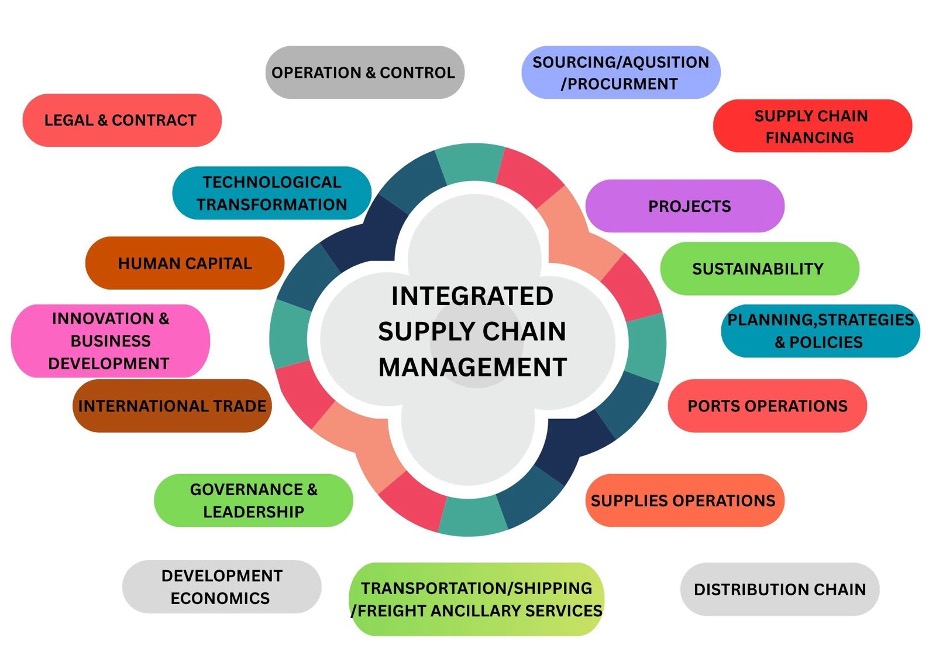
Seventeen Value Streams in ISCM
ISCM is composed of seventeen value streams that serve as strategic tools to close gaps and enhance optimization in supply chain practices. These value streams are designed to help organizations achieve Best Value through effective management and integration.
Sustainable Values of ISCM
ISCM projects several sustainable values that define its mission and vision:
- Visibility: Ensuring structural and product visibility to drive innovation and leadership.
- Acceptability: Becoming the preferred option through relevant and sustainable solutions.
- Relevance: Maintaining relevance through a futuristic mindset and continuous development.
ISCM Framework
The ISCM framework ensures effective and efficient deployment of work to deliver Best Value. It includes the following non-negotiable steps:
- Develop: Integrating supply chain mindsets and values in the initiation of any value stream.
- Plan: Creating frameworks, sub-frameworks, standards, and roadmaps before execution.
- Source: Developing sustainable sources and managing them effectively.
- Make: Focusing on core operations where demand and supply interact.
- Distribute: Aligning consumer demand with supply to ensure market share.
- Support: Providing resources, linkages, and assurances to stakeholders.
- Transform: Embracing a philosophy of reusing, recycling, and re-engineering to minimize waste and promote sustainability.
By adhering to these principles and frameworks, ISCM aims to create sustainable value that supports both organizational and societal growth.


Comments
Post a Comment