-
Local Aussies highlight a widespread issue with public transportation.
-
EXPLORE FURTHER: Home seekers notice embarrassing error in a Melbourne property listing
An unusual new behavior has emerged worldwide.
Melbourne
The city streets -- and it's confusing both commuters using public transportation and bus drivers alike.
Commuters in the CBD are increasingly being spotted standing still like 'a bunch of mannequins' at bus stops without signalling to the driver - then looking shocked when the bus drives straight past them.
The issue was first raised in a heated online forum, where frustrated locals called out the silent standoff happening at key bus corridors like Victoria Parade and Hoddle Street.
One user questioned, 'Isn’t flagging down a bus something we do?'
Reddit
.
'There are about 10-12 different bus routes that go along those roads; they can't afford to stop at every stop just to be ignored.'
Other people joined in to clarify how driver behavior had changed over time.
Transdev's former policy mandated that Melbourne bus drivers must halt for every individual arriving at a bus stop, irrespective of whether they gestured for the bus.
Following an influx of grievances from individuals so engrossed with their phones that they failed to notice or signal for the approaching bus, this modification was implemented. These distracted passengers often missed their chance to board despite the bus arriving.
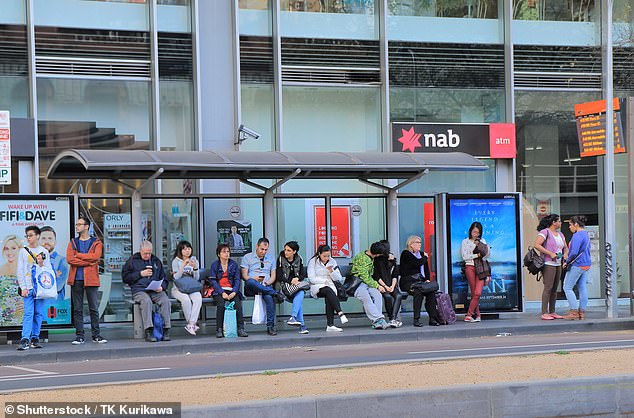
Motorists were told to shout out and inquire whether people at the stop planned to get on the bus—a socially uncomfortable exchange that swiftly altered how commuters behaved in the downtown area.
Critics argue against the rule stating it was 'an absurd policy likely created by individuals who have never held a position as a bus driver'. They highlight that repeatedly merging back into rush hour traffic after unnecessary stops poses significant safety risks and becomes highly inefficient in terms of time management.
'The belief is that the correct signal suggests accelerating,' they mentioned additionally.
Others, though, contend that depending solely on hailing isn’t always feasible, such as for visually impaired passengers or in busy street conditions where the bus number becomes obscured from sight.
'A passenger believes that buses ought to halt at every stop where potential riders are present. The concept of hailing seems less favorable,' noted an individual who frequently travels by bus.
A lot of people from Melbourne recounted experiences where buses drove right past them as they thought the drivers would halt automatically.

A person reminisced about his initial years at school: "During my first attempts to catch the bus, I thought it would halt for me just as a tram does. That darn vehicle zoomed right past without stopping."
A different commuter recounted an instance where a driver honked at individuals waiting close to the bus stop, declining to stop until those people raised their heads and gestured.
'And if not, he simply moved forward.'
The misunderstanding doesn't stop with buses.
A commentator observed a comparable trend at crossroads, where individuals fail to remember – or aren’t aware – that they must push the pedestrian button for the green walking signal to show up.
"A lot of individuals appear to simply coast along on autopilot," a woman penned.
This leads to a sort of public transportation purgatory, with each party unsure about taking the initiative.
According to seasoned bus riders, if you desire boarding that bus, lift your hand; otherwise, you might be left behind.
Read more


Comments
Post a Comment